
Finding the Perfect Motorcycle: An Survey of Value and Variety
Choosing the right motorcycle can be overwhelming, given the countless options and unique features offered by each model. From trail bikes to tourers, sporty options to versatile dual-sports, there’s something for everyone. This guide dives into some of the most iconic motorcycles and what makes them stand out in terms of performance, reliability, and value.
The Legendary Honda XR Series: Masters of the Dirt
The Honda XR series redefined dirt biking in the 1970s and 1980s, setting the gold standard for four-stroke dirt bikes in a two-stroke-dominated market.
Why the XR Stands Out
- History of Innovation: Launched in 1979, the XR series offered power, reliability, and low maintenance.
- Durability: Known for its indestructible build and long-lasting performance.
- Wide Variety: From 50cc to 650cc, the XR lineup offers something for everyone.
Buyer’s Tips
- Avoid the XR models with “L” suffixes—they are detuned for street use.
- Be cautious of early models (1979-1980) with 23-inch front wheels, as replacement parts are rare.
Honda Gold Wing: The Ultimate Touring Machine
The Honda Gold Wing is a top-tier tourer that combines luxury and reliability. Known for its advanced features and comfort, it remains a favorite among long-distance riders.
What Makes the Gold Wing Special
- Loaded with Features: From inbuilt passenger communicators to air suspension and CB radios, the Gold Wing is packed with tech.
- Longevity: With proper care, these bikes can last over 160,000 kilometers, offering decades of performance.
How to Find the Perfect Gold Wing
- Look for models with comprehensive maintenance records or collector plates.
- Prioritize models with air suspension and sound systems for the ultimate touring experience.
Suzuki Gladius: The Hidden Gem of Sport Bikes
Often overshadowed by its predecessor, the SV650, the Suzuki Gladius (SFV650) is an underrated sportbike offering outstanding performance at an affordable price.
Features That Shine
- Engine: A 645cc V-twin with MotoGP-inspired cylinder lining.
- Upgrades: Improved throttle bodies and fuel atomizers for smoother performance.
- Adjustability: Preload-adjustable front forks for enhanced handling.
Why Consider a Gladius?
While the SV650 is a racing favorite, the Gladius offers a more approachable price point without compromising on quality.
Kawasaki KLR650: Indestructible Adventure Machine
The KLR650 has a reputation as an unkillable dual-sport motorcycle, perfect for adventurers and off-road enthusiasts.
Unbeatable Reliability
- Indestructible Build: KLRs are known for their ability to withstand rough terrains and years of abuse.
- Affordable Parts: Replacement components are inexpensive and widely available.
Buyer’s Advice
- Look for stock models to avoid poorly executed modifications.
- Verify that the “doohickey” (balancer chain tensioner) has been upgraded.
Yamaha V-Star: A Forgotten Cruiser Bargain
Once a competitor to Harley-Davidson, the Yamaha V-Star offers high-quality performance and componentry at a fraction of the price.
What Makes V-Star Special
- Superior Build: Reliable V-twin engines with timeless cruiser styling.
- Affordable Luxury: Regularly ridden models are a safer purchase than neglected garage-kept bikes.
What to Watch For
Avoid heavily customized models with chopped frames or suspension—they’re often less reliable than stock versions.
Conclusion
Whether you’re drawn to the rugged adventure of the KLR650, the refined luxury of the Gold Wing, or the sportiness of the Gladius, there’s a perfect motorcycle for every rider. Consider your priorities—performance, reliability, or versatility—and find the machine that best suits your needs.
FAQs About Motorcycles
Q1: Why is the Honda XR series legendary?
The XR series set benchmarks for durability and reliability in dirt biking, offering unmatched performance for over two decades.
Q2: Is the Honda Gold Wing suitable for touring?
Absolutely! Its advanced features and unparalleled comfort make it one of the best touring bikes available.
Q3: Why is the Suzuki Gladius underrated?
Despite its exceptional features and performance, the Gladius was overshadowed by the SV650, earning it a reputation as a hidden gem.
Q4: What makes the KLR650 so reliable?
Its rugged build, affordable parts, and long-standing reputation make it a dual-sport legend.
Q5: Should I buy a Yamaha V-Star for cruising?
Yes, especially if you find a well-maintained, stock model—it offers luxury and performance at a great price.

6 Best Mercedes-Benz Cars to Watch For in 2025-2026
The Mercedes-Benz lineup isn’t just about cars; it’s a statement. A masterpiece of luxury, power, and cutting-edge technology designed for those who demand the best. From stunning SUVs to sophisticated sedans, Mercedes-Benz has something extraordinary for everyone.
Mercedes-Benz GLS
The 2025 Mercedes-Benz GLS is more than an SUV; it’s a testament to luxury and performance. Its striking grille and sleek LED lighting command attention the moment it hits the road. Inside, you’ll find premium materials, a massive dual 12.3-inch infotainment system, and enough space for seven passengers to ride in absolute comfort. Massaging seats, a Burmester 3D surround sound system, and ambient lighting create a first-class driving experience.
Under the hood, the GLS delivers serious power:
- GLS 450: 3.0L turbocharged inline-6 mild hybrid engine producing 362 horsepower.
- GLS 580: 4.0L V8 engine pushing 483 horsepower.
- AMG GLS 63: 603 horsepower, taking luxury performance to the next level.
With 4MATIC all-wheel drive and adaptive air suspension, every drive feels effortless. The price starts at $88,200 for the GLS 450, $113,000 for the GLS 580, and $145,000 for the AMG GLS 63.
Mercedes-Benz GLE
The 2025 GLE perfectly blends technology, elegance, and power. It features a 2.0L turbocharged 4-cylinder engine generating 255 horsepower and an optional 3.0L inline-6 with 362 horsepower. Paired with Mercedes’ signature 9-speed automatic transmission, the GLE offers impressive performance.
Inside, the tech lover’s dream comes alive with a 12.3-inch touchscreen, Apple CarPlay, Android Auto, and a high-end sound system. Safety tech like adaptive cruise control and lane-keeping assist come standard. Starting at just $60,000, the GLE delivers serious luxury without breaking the bank.
Mercedes-Benz E-Class
The 2025 E-Class is redefining the luxury sedan segment. Sleek, sophisticated, and packed with tech, it offers two powertrains:
- E 350: 2.0L turbocharged inline-4 with 255 horsepower.
- E 450: 3.0L inline-6 with 375 horsepower.
Inside, the cabin is a masterpiece with high-end materials, customizable ambient lighting, and the latest MBUX infotainment system featuring dual 12.3-inch screens. The starting price is $60,000 for the E 350 and $73,000 for the E 450. The E-Class remains the go-to luxury sedan for those who demand the best.
Mercedes-AMG CLE 53 Coupe
For those who crave performance, the 2025 AMG CLE 53 Coupe is built to thrill. With a 3.0L turbocharged inline-6 hybrid engine churning out 429 horsepower and 413 lb-ft of torque, this coupe launches from 0 to 60 mph in just 4.2 seconds. It features an aggressive front grille, sleek aerodynamic lines, and an interior designed for driving enthusiasts. AMG-specific seats, carbon fiber details, and a high-tech infotainment system make this a performance car with luxury at its core. Priced at $75,000, it’s an absolute powerhouse.
Mercedes-Maybach S-Class
For those who demand nothing but the best, the 2026 Mercedes-Maybach S-Class redefines ultra-luxury. Powered by a 4.0L V8 hybrid engine with 603 horsepower, this sedan offers an unmatched driving experience. Inside, it’s a sanctuary with hand-stitched leather, exquisite wood trims, reclining rear seats with massage functions, and even a built-in champagne cooler. Cutting-edge tech includes an OLED infotainment screen, augmented reality navigation, and level three autonomous driving. The price is a staggering $220,000, but for those who can afford it, it’s worth every penny.
Mercedes-Benz G-Class
The 2025 Mercedes G-Class is an icon, a legend, and now more advanced than ever. With a 4.0L twin-turbo V8 delivering 577 horsepower and a plug-in hybrid option offering up to 60 miles of electric range, the G-Wagon stays true to its roots while embracing the future. Its signature boxy design, three locking differentials, and luxurious high-tech interior make it the ultimate off-road luxury SUV. The price starts at $140,000 for the base model, while the AMG G63 can exceed $180,000.
Conclusion
From SUVs to sedans, from power to luxury, Mercedes-Benz continues to lead the way in automotive excellence. Which one of these beasts is your favorite? Let us know in the comments, and if you love high-performance and luxury car content, don’t forget to subscribe and hit that bell icon for more updates.
Frequently Asked Questions (FAQs)
Q1: What is the starting price of the 2025 Mercedes-Benz GLS 450?
A1: The starting price of the 2025 Mercedes-Benz GLS 450 is $88,200.
Q2: What engines are available for the 2025 Mercedes-Benz E-Class?
A2: The 2025 Mercedes-Benz E-Class offers two engine options: a 2.0L turbocharged inline-4 with 255 horsepower and a 3.0L inline-6 with 375 horsepower.
Q3: How fast can the AMG GLS 63 accelerate from 0 to 60 mph?
A3: The AMG GLS 63 can accelerate from 0 to 60 mph in just 4.2 seconds.
Q4: What unique features does the Mercedes-Maybach S-Class offer?
A4: The Mercedes-Maybach S-Class offers hand-stitched leather, exquisite wood trims, reclining rear seats with massage functions, a built-in champagne cooler, an OLED infotainment screen, augmented reality navigation, and level three autonomous driving.
Q5: What is the electric range of the plug-in hybrid option for the 2025 Mercedes G-Class?
A5: The plug-in hybrid option for the 2025 Mercedes G-Class offers up to 60 miles of electric range.

The Dating Advice You’ll Ever Need
Do you have trouble navigating the dating world? Do you wish you could find your perfect someone without all the complications of dating? Well, you’re not alone. The dating scene can be frustrating, but a bit of advice can help get the ball rolling again. Here is a list of the only dating advice you’ll ever need.
1. Respect is Key
Respect is fundamental in any relationship. Healthy couples trust each other’s intentions and communicate respectfully. If you notice disrespect from your date, address it or recognize that it might not work out. Similarly, remember to respect your date as well.
2. Allow Intimacy to Progress Naturally
While honesty is important, revealing too much too soon can add unnecessary pressure. Allow intimacy to progress naturally. Take it slow and reveal your feelings gradually.
3. Don’t Limit Yourself to One Type
Your perfect partner might not meet all your criteria. Just because your date doesn’t share all your interests doesn’t mean they can’t be the perfect match. Keep an open mind and you might be surprised.
4. Communication is Key
Communication and respect go hand in hand in successful relationships. Be honest about who you are and how you feel. If something makes you uneasy, express it. If you enjoyed your date, let them know.
5. Focus on Who You Are Now
Early in dating, focus on the person you are now rather than your past. Show them who you’ve become. There will be time later to share your past experiences.
6. Don’t Alter Who You Are
Be authentic. Don’t pretend to be someone you’re not just to fit your date’s expectations. Authenticity attracts the right people.
7. Don’t Control the Conversation
Show genuine interest in your date. Don’t spend the entire time talking about yourself. Ask questions and listen to their responses. It’s about mutual compatibility.
8. Be with Someone for the Right Reasons
Evaluate why you’re with your partner. Are you truly happy around them? Avoid being in a relationship due to external pressures. Focus on genuine happiness and compatibility.
Conclusion
Which advice will you take? Are you lost in the dating world or have you found your special someone? Share with us in the comments below. If you found this post helpful, don’t forget to like and share it with someone who may need some dating tips.
FAQs
Why is respect important in a relationship?
Respect is fundamental for trust and effective communication, which are the pillars of a healthy relationship.
How can I allow intimacy to progress naturally?
Take it slow, express your feelings gradually, and avoid revealing too much too soon.
Why should I not limit myself to one type?
Your perfect partner might not meet all your criteria, and being open-minded can help you find unexpected connections.
How can I improve communication in dating?
Be honest about who you are and how you feel. Express any unease and let your date know if you enjoyed the time together.
Why is it important to be authentic?
Authenticity attracts the right people and ensures that you build relationships based on who you truly are.
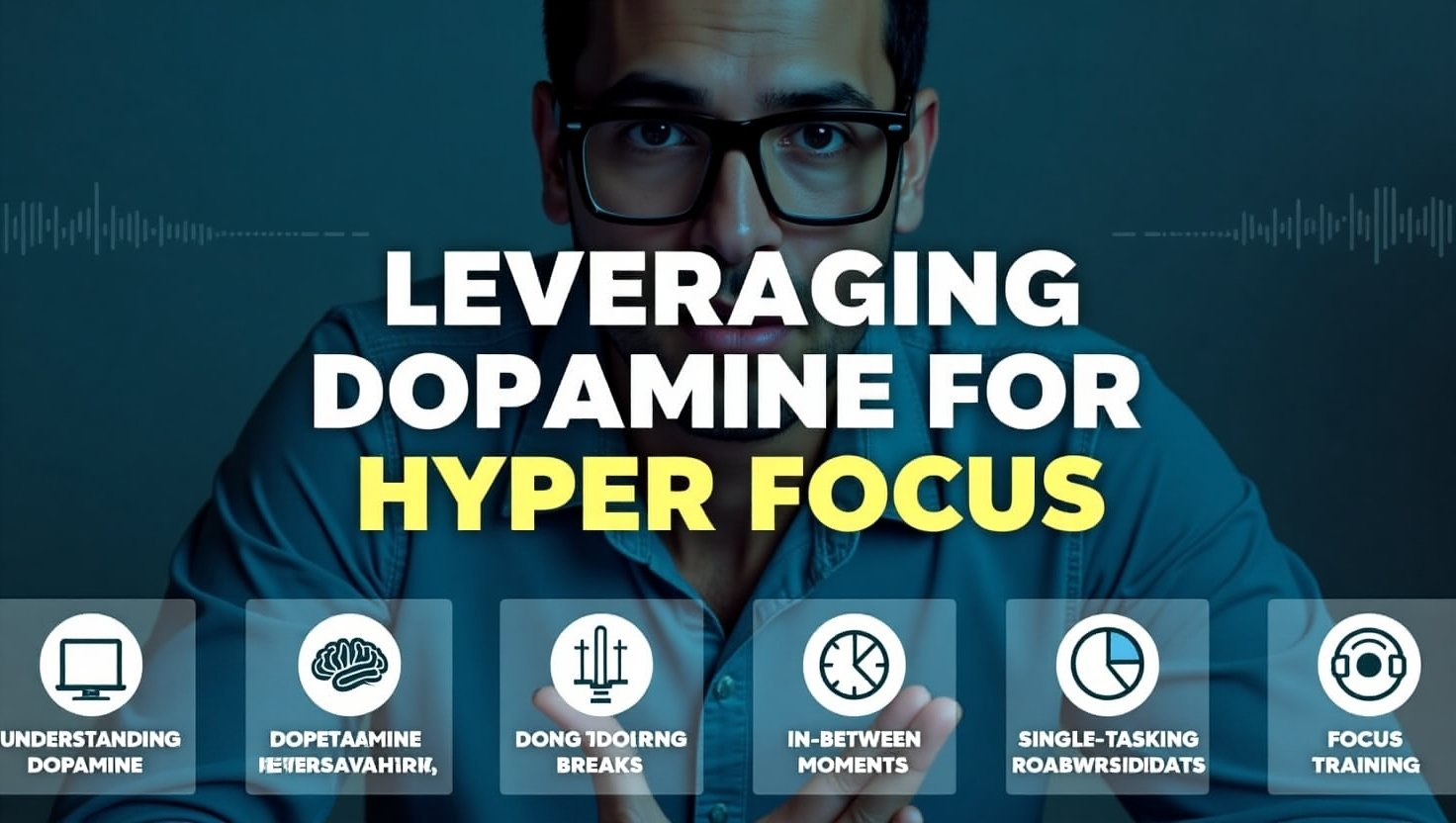
Neuroscientific | Leveraging Dopamine for Hyperfocus
Dopamine, the neurochemical often linked to distraction, overeating, and time-wasting on platforms like TikTok, can actually be harnessed to propel you into hyperfocus and productivity. In this blog post, I’ll explore how you can leverage your dopaminergic system to enhance focus and achieve a state of flow. As the CEO of Flow Research Collective, where we use neuroscience to help professionals access flow states, I’ll share practical techniques to optimize your dopamine levels for peak performance.
Understanding Dopamine
The Dopamine Mechanism Dopamine is a neurotransmitter that drives our desires and motivations. It plays a crucial role in reward, pleasure, and focus. The thrill we get from accomplishments and even addictive behaviors like scrolling social media can be attributed to dopamine.
The Myth of Dopamine Detox Scientifically, you can’t detox dopamine since it’s an essential neurochemical. Instead, the goal is to resensitize dopamine receptors, making you more sensitive to its effects. Low sensitivity requires high stimulation to feel rewarded, while high sensitivity requires less.
The Silent Zen Retreat Experience
A Personal Journey I once attended a silent Zen meditation retreat, where I spent 16 hours a day in silence, meditating and eating bland food. After the retreat, I noticed that mundane tasks felt rewarding, and my brain had been resensitized to find work engaging and satisfying.
The Dopamine Resensitization During the retreat, my brain’s dopamine receptors resensitized, allowing me to find joy in simple tasks. This experience highlighted the importance of resensitizing dopamine receptors to boost focus and productivity.
Strategies for Dopamine Resensitization
1. Take Boring Breaks Instead of engaging in stimulating activities during breaks, opt for boring activities like staring at a wall, napping, or light exercise. This resets your dopamine levels, making your work feel more rewarding in comparison.
2. Inhabit the In-Between Moments Avoid reaching for your phone during idle moments. Use this time to practice mindfulness or simply sit in silence. This reduces unintentional information consumption and increases your sensitivity to dopamine.
3. Focus on One Thing at a Time Multitasking desensitizes dopamine receptors and scatters attention. Train your brain to focus on one task at a time, whether it’s eating, working, or conversing. Embrace life as a series of singular activities to enhance focus and flow.
The Neuroscience Behind Focus
Default Mode Network (DMN) vs. Task Positive Network (TPN) When you’re not engaged in a task, the DMN is active. When focused, the TPN takes over. Rapidly shifting between these networks can enhance your ability to engage in focused attention, leading to flow states.
Training Focus By reducing distractions and practicing single-tasking, you can train your brain to switch from the DMN to the TPN more efficiently. This increases dopamine-fueled focus and enhances productivity.
Conclusion
Mastering your dopaminergic system involves taking boring breaks, inhabiting in-between moments, and focusing on one task at a time. These techniques can help you resensitize your dopamine receptors, leading to heightened focus, productivity, and access to flow states. Turn your work into play and gain a competitive advantage by leveraging dopamine for peak performance.
FAQs
Q1: What is dopamine and why is it important?
A1: Dopamine is a neurotransmitter that drives desires and motivations. It plays a crucial role in reward, pleasure, and focus, making it essential for productivity and achieving goals.
Q2: What is dopamine resensitization?
A2: Dopamine resensitization involves resetting dopamine receptors to make them more sensitive to dopamine, allowing you to feel rewarded with less stimulation and enhancing focus and productivity.
Q3: How can taking boring breaks improve focus?
A3: Boring breaks reset dopamine levels, making your work feel more rewarding in comparison. Activities like wall-staring, napping, or light exercise are effective for this purpose.
Q4: Why should I avoid multitasking?
A4: Multitasking desensitizes dopamine receptors and scatters attention. Focusing on one task at a time enhances reward sensitivity and improves focus and productivity.
Q5: What are the Default Mode Network (DMN) and Task Positive Network (TPN)?
A5: The DMN is active when not engaged in tasks, while the TPN takes over during focused activities. Shifting efficiently between these networks enhances focused attention and flow states.
Q6: How can I train my brain to focus better?
A6: Reduce distractions, practice single-tasking, and take boring breaks to train your brain to switch from the DMN to the TPN efficiently, increasing dopamine-fueled focus and productivity.
Q7: What are some practical techniques to enhance focus?
A7: Techniques include taking boring breaks, inhabiting in-between moments without reaching for your phone, and focusing on one task at a time. These strategies resensitize dopamine receptors and improve productivity.
Enemies of the Mind: Negativity and Positivity
Life is full of challenges and negative aspects. It’s important to recognize them but also to see the positive side. In this blog post, we will explore how to battle the enemies of the mind, especially pessimism, and embrace a balanced approach to life.
The Battle with Pessimism
Pessimism: Pessimism tries to make you believe that the glass is only half empty. However, it’s essential to educate pessimism and recognize that the glass is also half full.
Be in Charge of Your Mind: Take control of your thoughts and be in charge of your own destiny. Educate pessimism and remind it that while the glass is half empty, it’s also half full.
The Dual Nature of Love and Hate
Love and Hate Like Parents: In the summertime, learn to love like a mother and hate like a father. A father protects his family fiercely, while a mother nourishes and gives life.
Example of Mama Bear: A story of a man who took a flash picture of a mama bear and her cub illustrates the protective nature of a mother. The bear’s reaction shows how strongly parents protect their loved ones.
Nourishing and Protecting Your Values
Nourish Like a Mother: Nourish your values, family, organization, and responsibilities. Take care of what is valuable to you.
Battle with Enemies: Take up the sword against anything that threatens your values. Whether it’s worry or threats, fight back like the white corpuscles in your bloodstream that protect the body.
Harvesting and Taking Responsibility
Harvest Time: In the harvest season, take full responsibility for the results of your efforts. Don’t complain; instead, acknowledge your hard work and take pride in your achievements.
No Apologies for Success: If you have done well, offer no apologies. You deserve the success you’ve earned through your hard work and dedication.
Conclusion
In conclusion, life is a balance of nourishing the positive and battling the negative. By recognizing the duality of pessimism and optimism, love and hate, and by taking responsibility for your achievements, you can create a fulfilling and successful life. Remember, you have the power to shape your destiny and protect what is valuable to you.
FAQs
Q1: How can I educate myself to balance pessimism and optimism?
Start by acknowledging both sides of a situation. Practice gratitude and positive thinking, but also recognize and address challenges.
Q2: How do I protect my values and responsibilities effectively?
Set clear boundaries and prioritize what is important to you. Take action against anything that threatens your values.
Q3: What steps can I take to achieve life balance?
Regularly reflect on your life, spend quality time with loved ones, and take time for yourself to recharge and grow.
Q4: How do I handle complaints and negativity during the harvest season?
Accept responsibility for your actions and focus on the positive outcomes. Avoid complaining and instead, find solutions to challenges.
Q5: Why is it important not to apologize for success?
Success is a result of your hard work and dedication. Be proud of your achievements and don’t feel the need to apologize for your well-deserved success.

Financial Intelligence with Robert Kiyosaki: A Guide for Millennials
Welcome back! It’s Robert Kiyosaki here with Alexa, discussing Millennials and money. We have covered various lessons about assets, liabilities, and financial intelligence. Let’s delve deeper into these concepts.
The Basics of Financial Literacy
1. Assets and Liabilities Assets put money into your pocket, while liabilities take money out. Understanding this difference is crucial for financial intelligence.
2. The Importance of Cash Flow The six most important words for financial intelligence are income, expense, asset, liability, and cash flow. Controlling cash flow is the key to being rich, not just having a college education.
3. Financial Statements Most college graduates don’t know what a financial statement is. Financial literacy starts with understanding income, expense, asset, and liability.
Applying Financial Intelligence
4. The Reality of Home Ownership A personal residence is not an asset if it takes money out of your pocket. An investment property, on the other hand, can be an asset if it generates income.
5. Cars and Other Liabilities Cars are liabilities due to insurance, gas, and upkeep costs. However, a taxi car can be an asset if it generates cash flow.
6. Human Liabilities People can be assets or liabilities. Children, aging parents, and even spouses can become financial liabilities. It’s important to plan for these potential expenses.
Real-Life Examples
7. NFL Players and Cash Flow Many professional athletes earn millions but end up broke because they can’t control cash flow. Financial intelligence is about managing cash flow, not just earning money.
8. Personal Investment Experience Investing in rental properties can generate cash flow and reduce taxes. Robert and Kim’s experiences with rental properties highlight the importance of smart investments.
Financial Planning and Responsibilities
9. Planning for Family Liabilities As people age, family members can become financial liabilities. It’s essential to plan for long-term healthcare and other expenses.
10. Bad Advisors and Financial Risks Bad financial advisors, business partners, and even spouses can become liabilities. It’s crucial to choose trustworthy advisors and partners.
11. The Importance of Financial IQ Financial IQ measures your ability to solve financial problems. Controlling cash flow and planning for future liabilities are key aspects of financial intelligence.
Conclusion
Financial intelligence is the ability to control cash flow and plan for future expenses. Understanding the difference between assets and liabilities, and making smart investments, can lead to financial success.
FAQs
Q1: What is the difference between an asset and a liability?
A1: An asset puts money into your pocket, while a liability takes money out of your pocket. Understanding this difference is crucial for financial success.
Q2: Why is cash flow important?
A2: Controlling cash flow is essential for financial intelligence. It’s not just about how much money you make, but how you manage it.
Q3: How can I improve my financial literacy?
A3: Start by understanding your financial statements, including income, expense, asset, and liability. Educate yourself about managing cash flow and making smart investments.
Q4: Are children and aging parents financial liabilities?
A4: Yes, children and aging parents can become financial liabilities. It’s important to plan for their expenses and ensure you have the resources to support them.
Q5: What should I look for in a financial advisor?
A5: Choose a trustworthy financial advisor with a good track record. Avoid advisors who may have conflicts of interest or questionable practices.

15 Things You Can Buy That Will Make You Richer
Contrary to popular belief, spending money wisely can actually make you richer.
By the end of this guide, you’ll have a list of 15 things that can enhance your wealth and change the way you think about spending.
1. A Useful Education
Investing in a practical and relevant education is crucial. While traditional education often falls short in terms of wealth-building, acquiring skills that have real-world applications can set you apart and increase your earning potential.
2. Time-Saving Purchases
Anything that saves you time is a valuable investment. For example, moving closer to work, even if it means higher rent, can save hours of commuting time, which you can use for more productive activities.
3. Your Environment
Your surroundings play a significant role in your growth. Invest in a comfortable bed, quality food, and a positive living environment to enhance your overall well-being and productivity.
4. Country Club Memberships
Country clubs are excellent for networking. The high fees keep out mediocrity, allowing you to connect with successful individuals and build valuable relationships.
5. Online Courses
Online education offers actionable knowledge that you can apply immediately. High-quality online courses provide immense value and can significantly impact your career and personal growth.
6. Debt Repayment
Eliminating debt is essential for financial freedom. Paying off debt not only saves you money on interest but also reduces financial stress, allowing you to focus on wealth-building.
7. Books
Books are a treasure trove of knowledge and personal growth. Investing in books can provide you with new perspectives and insights that can improve your life and career.
8. Business Events
Attending business events allows you to network with industry leaders and gain valuable insights. The connections and knowledge gained at these events can open doors to new opportunities.
9. Better Accountants
A skilled accountant can save you significant amounts of money by optimizing your taxes and financial strategies. Investing in a good accountant is a smart financial decision.
10. Coaching Sessions
Executive coaches can help you navigate challenges and accelerate your growth. While they can be expensive, the right coach can save you years of trial and error.
11. Great Birthday Gifts
Thoughtful gifts strengthen relationships and create lasting memories. Investing in meaningful gifts can have a positive impact on your personal and professional life.
12. Travel
Travel enriches your life with experiences and memories. It broadens your perspective and can provide valuable life lessons that contribute to your personal and professional growth.
13. Another Apartment
Investing in real estate, such as buying a rental property, creates a steady income stream. This passive income can cover your expenses and provide financial security.
14. Equity in Other People’s Businesses
Buying minority stakes in profitable businesses allows you to benefit from their growth without the responsibility of running the business. It’s a strategic way to diversify your investments.
15. Time with Your Kids
Spending quality time with your children is invaluable. While money can’t buy happiness, investing in relationships and creating memories with your family is priceless.
Conclusion:
Wise spending can enhance your wealth and overall quality of life. By investing in these 15 areas, you can build a strong financial foundation and achieve long-term success.
FAQs
Q1: Why is investing in education important for financial success?
Practical and relevant education provides you with valuable skills that can increase your earning potential and set you apart in the job market.
Q2: How can time-saving purchases contribute to wealth-building?
Time-saving purchases free up more hours in your day, allowing you to focus on productive activities that can enhance your career and personal growth.
Q3: What are the benefits of attending business events?
Business events provide opportunities to network with industry leaders, gain valuable insights, and open doors to new opportunities.
Q4: Why is it important to eliminate debt?
Eliminating debt reduces financial stress, saves money on interest, and allows you to focus on building wealth and achieving financial freedom.
Q5: How can investing in real estate create financial security?
Owning rental properties provides a steady income stream, which can cover your expenses and offer long-term financial stability.
Speak Like A Leader : Lessons from Tommy Shelby of Peaky Blinders
People love Tommy Shelby from Peaky Blinders for his quiet, introverted nature combined with extreme charisma. While you might not want to emulate Tommy in every way, there are eight habits you can learn from him to command more respect from those around you. Although Peaky Blinders is a scripted TV show, the psychology discussed here applies to real life.
Slow, Relaxed Movements
Tommy’s slow and relaxed movements convey confidence and a lack of intimidation. When he’s not physically fighting, he’s almost never in a rush. This slow pace shows that he doesn’t feel scared or pressured.
Key Takeaways:
- Move slowly and comfortably in situations where most people would be stressed.
- This signals confidence and a sense of control.
Comfortable Eye Contact
Tommy maintains comfortable eye contact, even during conflicts. Holding eye contact during conflict can escalate tension if neither party breaks it. Know what your behavior signals to others:
- Hold eye contact to show you aren’t intimidated.
- Look down to deescalate.
- Break to the side to diffuse tension without projecting fear.
Example: Holding eye contact during a disagreement shows confidence and control.
Non-Reactivity
Tommy’s ability to remain non-reactive to hostility projects confidence. Being non-reactive shows you’re confident in handling whatever happens.
Example: Keeping cool under pressure, even with extreme situations like a gun to the head, demonstrates confidence.
Larger-than-Life Gestures
When addressing large groups, Tommy scales up his hand gestures to match the audience size, commanding attention.
Key Takeaway:
- Use larger gestures when speaking to more people to command attention.
Conviction in Speech
Tommy’s word choice shows conviction. He uses statements like “I will” instead of “I hope to” or “I want to.” Conviction can also be shown through tone, avoiding upward inflections that make statements sound like questions.
Example: “I will change the world” carries more conviction than “I hope to change the world.”
Slow Speaking Cadence
Tommy’s slow speaking cadence and strategic pauses hold attention. Pauses can pull people in, especially when they want to hear what you have to say next.
Key Takeaway:
- Use pauses strategically to maintain attention and emphasize points.
Quiet Confidence
Tommy doesn’t need to shout because he understands what people want or fear, giving his quiet words significant weight.
Example: Knowing someone’s desires or fears allows you to communicate powerfully without raising your voice.
Cultivating Deep Internal Confidence
Tommy’s calm demeanor under pressure comes from knowing he’s not in danger. This deep internal confidence is cultivated over time.
Key Takeaway:
- Build genuine confidence through self-assurance and preparation.
Applying These Lessons to Your Life
You don’t need to emulate Tommy’s more extreme behaviors, like threatening violence. Instead, use these principles to navigate real-life situations, such as asking for a raise.
Example: Approach your boss with a concrete plan showing how you add value to the company. Have other job offers as leverage.
Conclusion
Commanding respect involves slow, confident movements, comfortable eye contact, non-reactivity, larger gestures in groups, conviction in speech, a slow speaking cadence, quiet confidence, and deep internal confidence. By adopting these habits, you can navigate life with the charisma and respect that Tommy Shelby commands.
FAQs
Q1: Why does moving slowly convey confidence? Moving slowly and comfortably signals that you don’t feel scared or pressured, conveying confidence and control.
Q2: How can I maintain eye contact without escalating tension? Hold eye contact to show confidence, look down to deescalate, and break to the side to diffuse tension without showing fear.
Q3: What is the importance of non-reactivity? Being non-reactive shows that you are confident in your ability to handle any situation, which commands respect.
Q4: How can I show conviction in my speech? Use strong, definitive statements and avoid upward inflections that make statements sound like questions.
Q5: How do I build deep internal confidence? Cultivate genuine confidence through self-assurance, preparation, and understanding your strengths and abilities.

Photographic Memory : Remember Everything You Read
Do you want to remember everything that you read? Did you ever realize how much information we forget every single day, even the things we spend hours studying? Yet, some extraordinary people can memorize entire books. What if I tell you that you can do that too in just one week from now, three best memory techniques to help you become a pro at remembering things.
How Our Brain Works:
Research shows that our brains have evolved to remember information that helps in our survival and fitting better into our environment. Our brain only remembers things if it believes they are important for our life at that moment.
Key Principles of Memory:
- Value: The brain remembers information that seems valuable.
- Relation: The brain connects new information to existing knowledge.
- Repetition: The brain strengthens memories through repeated exposure.
The Truth About Photographic Memory
Does photographic memory exist? The answer is no. People don’t have powers like photographic memory, just as magicians don’t have magical powers. However, there are memory techniques that can make you the magician of your own memory.
Three Best Memory Techniques
- Active Recall:
- Derived from the principle of Value.
- Signals your mind that the information is valuable.
- Force your brain to retrieve information by making questions and answering them without looking at notes.
- Example: Write questions on the front of a paper and answers on the back. Recall answers to reinforce memory.
- Memory Palace:
- Derived from the principle of Relation.
- Relates new information to existing knowledge by visualizing a familiar location (e.g., your house).
- Associate information with specific locations within the mental palace.
- Example: Visualize your room and place different items in specific spots to remember them better.
- Sani Method (Flashcards):
- Derived from the principle of Repetition.
- Effective way to build flashcards with Summary, Relation, and Representation.
- Steps:
- Give the flashcard a title and write an informal summary.
- Explain how new knowledge relates to existing knowledge.
- Draw a picture to represent the concept visually.
Practical Application
These methods have been tested and proven effective. Practice them consistently, and you’ll be able to remember hundreds of words in a row.
Example:
- Attach stories and emotions to the information to make it memorable.
- Visualize scenarios to create a strong mental image.
Conclusion
By practicing these methods and mastering these techniques, you can improve your memory and retain information more effectively. These methods are just the tip of the iceberg; there are more scientific methods to adopt, especially if you’re a student.
.
FAQs:
Q1: What is Active Recall? Active recall is a method that forces your brain to retrieve information, making it feel valuable and reinforcing memory.
Q2: How does the Memory Palace technique work? The Memory Palace technique involves visualizing a familiar location and associating new information with specific spots within that location.
Q3: What is the Sani Method? The Sani Method involves creating effective flashcards with a title, summary, relation to existing knowledge, and a visual representation.
Q4: How often should I practice these techniques? Consistent practice is key. Use these techniques regularly to strengthen your memory.
Q5: Are there more advanced memory techniques? Yes, these are just the basics. There are more advanced scientific methods you can adopt to improve your memory further.

Negotiation: Lessons from Chris Voss
Imagine you’re going to a very important party with your partner, and you want to wear black shoes, but your partner wants you to wear brown shoes instead. How would you negotiate this situation? Many people believe that win-win or 50/50 is the best outcome in negotiation. If you think so, what is the win-win in this example? Are you going to wear one black shoe and one brown shoe? It sounds ridiculous, right? Chris Voss, author of the New York Times best-selling book “Never Split the Difference: Negotiate as If Your Life Depends on It,” does not believe in win-wins. With over 20 years of experience as a hostage negotiator at the FBI, Chris found that the fundamentals of human negotiations are essentially the same in any situation.
Lesson 1: Understand First
Every negotiation begins with the universally applicable law that people want to be understood and accepted. Listening is the cheapest yet most effective thing we can do to achieve this. By listening intensely, you demonstrate empathy and a sincere desire to understand what the other side is experiencing.
Key Points:
- People usually yell in negotiations because they feel unheard.
- Everyone wants to be understood, respected, and then get what they want.
- Failure to listen leads to failed negotiations.
Lesson 2: Negotiation is Not a Battle; It’s a Discovery
People who view negotiation as a battle of arguments become overwhelmed by the voices in their heads. Negotiation is about uncovering what the other side wants, whether it’s money, time, respect, or recognition.
Tactics:
- Smile: Smiling switches on positivity and makes us 31% smarter.
- Mirroring: Repeat the last three or most critical words your opponent said.
- Example: “You want more money.”
- Mirroring makes the opponent reveal more information.
Lesson 3: Tactical Empathy
Tactical empathy involves understanding the feelings and mindset of the other person and identifying emotional obstacles. Once identified, label the emotion.
Labeling:
- Labels start with “It seems like…” or “It sounds like…”
- Example: “It seems like you care a lot about your students.”
- Labeling confirms the right emotion and shows the opponent that you understand them.
Diffusing Negatives with Labels:
- Identify negative feelings your opponent might have and label them.
- Example: “It might seem like we’re screwing you and can’t keep our promises.”
- Diffusing negatives helps focus on solutions rather than complaints.
Lesson 4: Start with No
Pushing hard for a yes doesn’t bring victory. No is the start of the negotiation, not the end.
Key Points:
- Saying yes can make people feel committed or trapped.
- Starting with no makes people feel safe and in control.
- Example: “Is it a bad time to talk for 5 minutes?”
Lesson 5: “That’s Right”
“That’s right” is one of the most powerful phrases in negotiation. To get this response, repeat your opponent’s words back to them.
Key Points:
- “That’s right” means your opponent feels completely heard.
- Avoid “You’re right” as it often means they want to end the conversation.
Conclusion:
Dealing with people is one of the hardest jobs. You can be perfect at your job, but poor people skills can make work challenging. By following these lessons from Chris Voss, you can become a better negotiator and achieve more successful outcomes.
FAQs:
Q1: Why is listening important in negotiation? Listening demonstrates empathy and a desire to understand the other side, which is crucial for successful negotiation.
Q2: How can I use tactical empathy in negotiation? Understand the feelings and mindset of the other person, identify emotional obstacles, and label the emotions to confirm and show understanding.
Q3: Why should I start with no in negotiation? Starting with no makes people feel safe and in control, leading to more effective negotiations.
Q4: What is the difference between “That’s right” and “You’re right”? “That’s right” means your opponent feels heard and understood, while “You’re right” often means they want to end the conversation.
Q5: How can I diffuse negative emotions in negotiation? Identify negative feelings your opponent might have and label them to help focus on solutions rather than complaints.