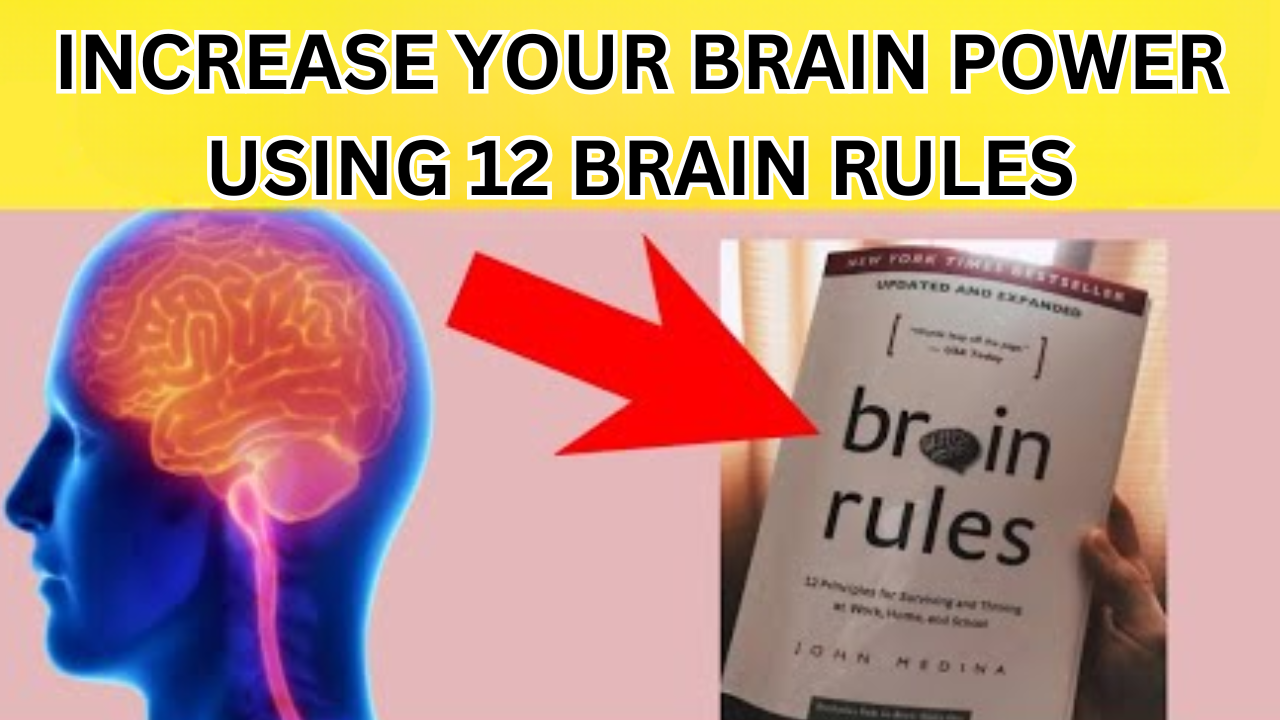
INCREASE YOUR BRAIN POWER USING 12 BRAIN RULES:
Have you ever wondered why some days your mind works at a great speed and sometimes it seems that it is moving in slow motion, that is, your mind is not completely in your control, that is why today we will talk about molecular biologist John Marina’s book Brain Rules, which reveals such 12 powerful brain rules that can transform your thinking, learning and overall life. From better memory to improving focus, this book tells the way to unlock the hidden potential of your brain so that you can take your brain to the next level. So let’s start.
Rule no 1 The Human Brain Evolved:
Let’s simplify science and start from the first rule, rule number one The Human Brain Evolved According to Darwin’s Theory of Evolution, we have evolved from monkeys to humans, which took billions of years, but these changes were not just physical, our brain has also evolved with time, that is, it has developed. Our brain has been created for survival to solve these problems and Designed to survive in unpredictable environments First we had the lizard brain which controlled basic functions like breathing Then came the cat brain which controlled the brain
which handles our emotions and fear Whenever there is danger, the brain reacts Then we developed the cortex which is a powerful part of the human brain It helps us understand complexities Because of this evolution we humans have become experts in problem-solving Understanding the thoughts of others Working in groups We were able to dominate our unconnected world.
Rule no 2: Exercise Boosts Brain Power:
Rule number two Exercise boosts brain power Movement is our brain’s best friend During evolution our ancestors used to move all day They used to roam around hunting and this movement kept their brain sharp Today
Our sedentary lifestyle does not give the human brain the movement it needs When we exercise our brain gets glucose and oxygen which keeps the neurons alive and creates new ones Builds brain cells Harvard psychiatrist John Ratey says exercise works like Miracle Grow for your neurons. Miracle Grow is a plant fertilizer that helps plants grow and become healthy. In the same way, exercise works like a fertilizer for the neurons in your brain. When you exercise, your brain releases a chemical called brain-derived neurotrophic factor that helps neurons grow and repair.

Rule no 3: Sleep well, think well:
Rule number three: Sleep well, think well. Sleep is king. When we sleep, our brain processes the day’s information, sorts it out and turns it into memorable memories. Without sleep, your brain slows down. Your decision-making ability and memory both weaken. A Harvard study shows that if you are sleep-deprived, your reaction time and cognitive ability decrease by up to 40 percent, and proper
sleep improves your creative problem-solving skills and learning. There is a lot of improvement. DJ Peter Tripp from New York hosted a marathon radio show without sleeping for 200 hours. The result was that he started having seizures. His brain started showing wrong images and scenarios. His mental state deteriorated so much that it became difficult for him to differentiate between reality and imagination. Therefore, proper sleep not only makes you fresh and alert but also recharges your brain and maintains its functioning.
Rule no 4: stressed brains don’t learn:
In the same way, when we are stressed, our body goes into fight or flight mode, and chronic stress damages important areas of our brain. Research says that chronic stress shrinks the hippocampus, which directly affects your memory and learning abilities. This damage can be long-term. Therefore, it is very important to manage stress. This study shows that during stress, the neurons of our brain do not fire properly, which affects problem-solving and creativity. In a famous experiment, a German
Shepherd was given electric shocks but even when he had the option to run away, he did not react because the stress had damaged his brain so much that he froze. This is the impact of stress on our brain. That is why stress management techniques like mindfulness and exercise are very important.
Rule no 5: Every brain is wired differently:
Rule number five: Every brain is wired differently. Every person’s brain is unique. We all think differently, learn differently and all this happens because of our brain wiring. The way you process information is
You evolve through your personal experience and learning. Neuroscientists have proven that when we learn new experiences and skills, our neurons make new connections. This process is called brain plasticity, which helps you to continuously evolve and adapt. That is why every person’s learning ability is different. Let’s take the example of Michael Jordan. He was the biggest champion of basketball, but when he tried to make a career in baseball, he could not succeed because his brain was wired for basketball but not for baseball. Every person’s talent and learning capacity depends on his brain wiring.
Rule no 6: We don’t pay attention to boring things:
Rule number six: We don’t pay attention to boring things. Our brain pays attention only to those things which are either interesting or emotional. Paying attention to boring things is a struggle for the brain because our attention span is limited. In today’s time where there are so many distractions, our brain Focuses only when something is emotionally engaging or exciting. Research shows that our attention span is around 10 minutes. If after that you do not find anything interesting or engaging, then your brain starts losing attention. To activate the reward system of the brain, some exciting or emotional inputs are necessary. If you are sitting in a class or meeting and you find something boring, then after 10 minutes you automatically zone out. Many times we forcefully pressure ourselves to do such tasks which are boring for us and then we keep failing in them again and again. To avoid this, make those tasks engaging by doing anything so that you can remain fully focused.
Rule no 7: repeat to remember:
When If you want to remember something new, just reading or listening to it once is not enough. You have to repeat that information again and again so that your brain can store it in long-term memory. Studies show that when you repeat something in spaced intervals, your memory improves. Your brain needs continuous exposure so that the neurons can make strong connections. Do these spaced repetitions. You have to memorize a topic for the exam. If you study it for just one day, you will remember it in the short term but you will forget it in the long term. But if you revise that topic a little bit every two to three days, then the brain will store it in long-term memory.
Rule no 8: Stimulating the more senses:
Rule Number 8 Stimulating the more senses it uses, the better it processes the information. When you experience the same thing through multiple senses like seeing, hearing, or touching, then your brain stores that information better. The more senses you develop, the stronger your memory will be. In a study, people were asked to memorize a list. When they were just asked to read it, when they were shown the same information with visuals and they got a chance to interact with it, their recall was much better. That is why we remember the stories of movies and TV shows better because we watch, listen, and experience them. If you are just reading something, then only a limited part of the brain is active, but when you watch or listen to that thing, more areas of your brain become active, which makes learning and memory more effective. And if we talk about the most powerful sense, then it is vision.
Rule no 9: Vision tames all other senses:
Rule number nine. Vision tames all other senses. Our brain spends 50% of its energy in visual processing only. When we see something, the brain converts that visual into a story which gets stored strongly in the memory. Vision is called the super sense because visual learning is the most powerful way to remember information. In an experiment, people were told a speech but without visuals, they quickly lost interest. When visuals were added, people understood the information more effectively and also remembered it. This proves that our brain gives priority to visuals and that is why images or videos are more important in our mind.
Rule no 10: Study or Listen to Boost Cognition:
Henry was a 92-year-old dementia patient who was completely unresponsive for years. He had lost his memory and personality and the doctors also considered the chances of his recovery to be very low. But when his favorite music was played to him, a change was seen. He suddenly started singing, started remembering his old memories, and started remembering his old memories. Music has started showing its effect on actions as well The effect of music is not limited to just emotions It also boosts the cognitive functions of the brain Studies have proved that music improves memory, attention, and learning skills Music has a direct connection with multiple regions of our brain which activates memory and focus and enhances overall cognitive performance Research says that specific types of music like classical music synchronize the firing rate of neurons which improves problem-solving and concentration Music therapy is also helpful for those who have memory related issues like dementia.
Rule no 11: Male and female brains are different:
Rule number 11 Male and female brains are different for all of us. We know that the way of thinking of men and women is different, but this is not only due to upbringing or culture, science says that the structure and functioning of their brains is also different. That is why the way of processing stress, emotions, and memory is different for both males and females. Research shows that during stress, the right amygdala of men is activated, which helps them to understand logically, while the left amygdala of women is activated, which helps them to remember emotional details. That is why in stressful situations, the reaction of men and women is different.

Rule no 12: We are powerful and natural explorers:
Rule number 12 we are powerful and natural explorers we have all been curious since childhood. Touching, seeing, and understanding everything is an instinct of our brain. When we explore new experiences, our brain makes new neural connections, which make us smarter and more adaptable. This is very important for our growth and learning. Research says that the hippocampus of the brain the campus that controls learning and memory grows only when we seek out new experiences. This ability helps us to adapt to every new situation.
Neuroscience proves that our brain is always wired to learn and explore something new. Think of a small child. Even when the parents forbid it, the child still explores things because his brain naturally wants to learn.
Conclusion:
The document highlights 12 brain rules from molecular biologist John Medina’s book Brain Rules, aimed at enhancing mental performance. These rules emphasize the importance of evolution, exercise, sleep, stress management, individualized learning approaches, repetition, sensory engagement, vision prioritization, music, gender differences, and exploration. Together, these principles provide a practical guide for improving memory, cognition, and adaptability while promoting overall brain health.
FAQs
1. How does exercise impact brain power?
Exercise boosts brain function by increasing the flow of glucose and oxygen, which nourishes neurons and promotes the growth of new brain cells. It acts like “fertilizer” for the brain, enhancing learning and memory.
2. Why is sleep essential for cognitive performance?
Sleep allows the brain to process daily information, convert it into long-term memories, and recharge. Sleep deprivation impairs memory, decision-making, and problem-solving abilities, reducing reaction time and creativity.
3. How does stress affect learning?
Chronic stress damages the hippocampus, a critical area for memory and learning. It reduces neuron activity, stifling creativity and problem-solving. Stress management techniques are essential to mitigate these effects.
4. Why are visuals more effective for memory?
The brain dedicates 50% of its resources to visual processing, making vision the most dominant sense. Visual learning is impactful as it creates strong, memorable connections compared to text or speech alone.
5. Are male and female brains different?
Yes, male and female brains differ in structure and response to stress. For instance, men process stress logically through the right amygdala, while women focus on emotional details via the left amygdala, leading to varied reactions.
Integrate the Discipline in Your Life To Be Great and Successful:
The Power of Discipline by Daniel Walter explores the importance of self-discipline in achieving success and personal growth. It emphasizes that while talent and intelligence are valuable, discipline truly sets successful individuals apart.
Understanding Self-Discipline is the ability to push yourself to take action, regardless of how you feel emotionally. It helps you stay focused on long-term goals by consistently taking small daily steps.
The Neuroscience Behind Discipline The article explains how the brain works, particularly how habits are formed. Walter breaks down the role of dopamine, the “reward chemical,” which helps develop discipline through positive reinforcement.
7 important rules for discipline:

If you start following then you People can bring such discipline in their lives asked what is the Rules Doctor Book smiled and said Patience you will know all the rules but Before that, my condition is that all seven will listen to the rules because all these rules should be followed by one to another Comply.
There are two ways to make a pay line first you stop doing those works that you should not do and second, you do more of those things that are good for you. Let us understand these seven rules by the story of two friends Sara and Simon.
Rule: 1 The Practice of Urge Surfing and Controlling Impulses:
It will tell you how you don’t do those things which you should not do under this rule The author has told in the book which is called The Practice of Urge Surfing and Controlling Impulses. Ok, tell me both of you what is that thing which you people sometimes want to not do but still you keep doing it.
Sara immediately got excited and said reel Scrolling I keep scrolling reels all day and many times I want that I don’t scroll reels and do my work important but even if I don’t want it, my mobile comes out of my pocket and in reels, I waste a lot of time, this is the thing.
I want to remove from my life I want I am Dr. Book, who said right in my journey of discipline, one thing that will challenge you the most is your Impulses, that little voice that comes in our mind many times and says that mobile pick up, let’s watch the reels, let’s watch one more episode, let’s eat one more slice of pizza to fight these impulses.
To fight this, there was a psychologist named Ellen Bartlett, developed a technique to fight this, which is called the urge Bartlett told me that you have to look at urges like the waves of the sea, when a wave comes, it is small at first, then peaks but It goes up but then falls again.
Similarly, our impulses are also there when we get any impulse, it is initially very strong but if you give it a little movement, give it a little time, and instead of listening to the impulses, just observe it, it will help you a lot Then the doctor told him about a patient named Jennifer who was a working professional with whom there was a problem that she used to follow her diet well throughout the day but as soon as night came, her patience started breaking her diet used to get spoiled in the evening and she used to start eating junk food.
Because she had a lot of temptations at night and then I told her the technique of urge Surfing. I told her that whenever you feels like eating junk food she just stops for 10 minutes and observes the thoughts coming into your mind without judging them no, doing this thing in the beginning was a bit difficult, and a bit stupid too.
But because I told her to do it, she seriously did it and after some time she came and told me how when she started following this 10-minute ritual whenever an urge came, she noticed that yes, starting For some time it felt like eating a lot, at that time.
If he does not lose his desire and does not give in a little then that desire automatically starts to reduce Doctor Book also asks them has it ever happened to you people that you felt like eating something a lot but because of some reason it took time, maybe you got late in reaching that restaurant or something happened due to which the time increased and after that, your desire started to reduce before and when that food came in front of you then your desire to eat that food completely reduced has this ever happened to both of you It is said.
Rule: 2 Understanding the Science of Discipline:
The doctor said there is a science behind discipline. Your rule number two is also the discipline of Understanding the science of learning. The camera placed an offer in front of some participants.
The offer was that you have two options. If you want, you can take $100,000 right now or If you wait for 10 years, I will give you $100,000 instead of 1 million dollars. Now when this offer was placed in front of people, most people without thinking chose the option of 1 lakh without understanding.
Because getting the reward right away seemed more attractive to them. This experiment was being conducted at the same time while their brains were being scanned. When this scan happened, some interesting things came to light and people immediately chose the offer of getting the reward.
It was in their minds that The centers of impulses were quite lit up, but for those who were willing to wait, two different parts of the brain called the ventral middle prefrontal cortex and dorsolateral prefrontal cortex started working which are also used in self-control and decision-making processes.
Basically, from this experiment, they found out that when we run towards an immediate reward, then the ventral stem atom of our brain works, whereas if you start thinking consciously and think about the later benefits, then the pre-frontal cortex works more.
The amazing thing now Simon, after hearing this got a little confused, he felt good after hearing it But he said, Doctor, what will we benefit from this if we understand this thing, then the doctor said, look, this experiment revealed that two different parts of our brain which are for immediate reward a different part works which is called delay a different part works for gratitude means if we train that part of ours, pre-frontal cortex, then delay.
It will become easy for us to do certification now it is like going to the gym, you saw there must be many people who go to the gym but They don’t hit their legs, they skip leg day If they do, then their upper body is very strong but their legs are weak about which a lot of jokes are made, right, they said yes, a lot of people are made fun of like that.
When you put that part of your brain to work more which is the pre-fundal cortex and practice it more, it will be stronger and as it becomes stronger, you will be able to do more disciplined things, so this means that start training your discipline muscle not doing it instantly graciously, do you watch shorts reels or instant will be strong on the other hand.
If you start practicing self-control by doing small things, whether it is setting long-term goals and working on them saving money daily, weekly monthly building your own business, or working on your health, anything If you work on something that strengthens your self-control muscle then it will directly or indirectly help you in bringing discipline in all other things and this thing is very powerful.
For example, if you want discipline in business then you don’t need to bring discipline only in business if you enjoy going to the gym, and If you can bring discipline in the gym then indirectly by bringing discipline in the gym your business discipline will also increase and this is mind-blowing and this is you have to understand science to bring discipline.
So tell me now for discipline which is the easiest thing that you can do enjoy and you can do for a long time Simon said I like playing cricket so the doctor said ok do one thing start playing cricket with discipline and Sara said I like swimming so the doctor said to start at least bring discipline in swimming Do it regularly.
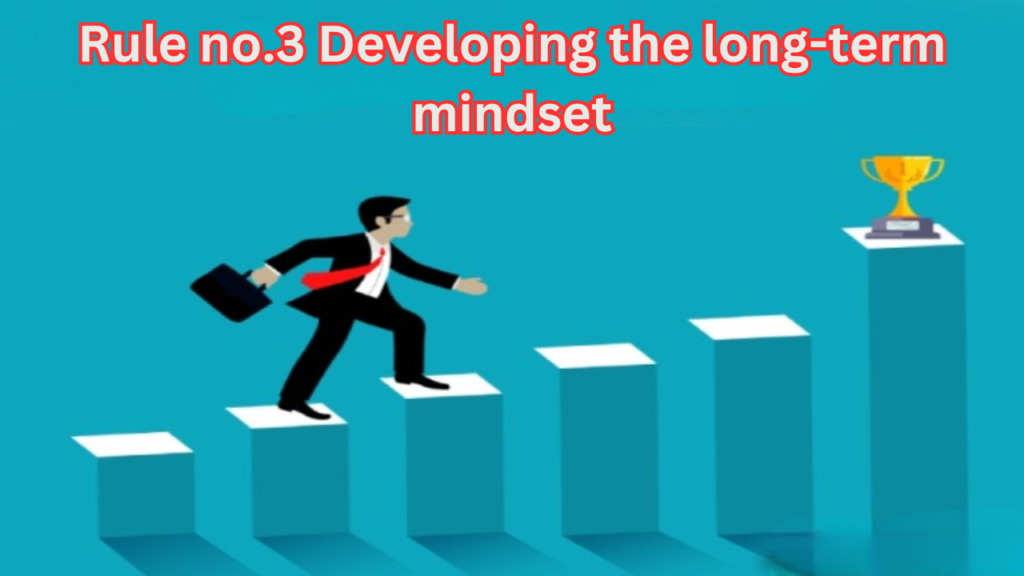
Rule: 3 Developing the long-term mindset:
Rule number three which is developing a long-term mindset Doctor Book asks both of them whether they know any famous person who has made a lot of money by thinking of long-term investing both of them said together.
But do you know that Warren Buffett’s long-term mentality, a mindset that was not developed just like that there is an interesting story behind it? When Warren Buffett was just 11 years old, he bought his first stock but he also had this instant gratitude which is why after some time he started seeing some profit in that stock so he sold that stock and earned some profit after a few years.
He realized that if he had waited a little longer then if he had waited the same stock for which he had made some little profit, he would have made 10 to 20 times more profit if he had thought long-term and this proved to be a very big lesson of his life.
After this, Varun Buffett trained his brain on how to play the long-time investment game and not go after instant great fours like most people and this you can say became a core that made Varun Buffett So much Made you rich which is called a marathon the Mindset Doctor said you both are yourselves Think about a marathon runner and a sprinter There is a difference.
A sprinter has to run fast for some time he runs with all his might but in a short while, he gets exhausted and gets tired due to which he has to rest whereas marathon runners distribute their energy very wisely maintain a pace, and slowly move towards their goal.
Because they have to run for a long time you will have to adopt a mindset. The more you start thinking long-term, the more there is a chance that your discipline will also increase. The more you people think short-term about things, the weaker your discipline will be.
On this, Simon asked, does that mean you are saying that if I set short-term goals like I want to become a millionaire in a month or a billionaire in 1 year then it is not good? The doctor said yes, if you people run after short-term things, then this thing will weaken your discipline muscle.
Whereas the more you think long term and learn to be patient and you will keep working. That much Your discipline will develop and don’t worry There is an easy way to do this which You will understand.
Rule: 4 Daily Habits Routines:
Rule Number Four Daily Habits Routines You Both have heard the name of Mike Tyson who is a legend in the world of boxing now maybe you know about him But one thing you might not know is that He used to follow his training routine religiously and it was not that he liked training he hated training.
He himself said
“ I hate Every minute of training but I said to Myself don’t quit the journey now and live the Rest of your life as a champion.” When the whole city used to sleep Even then Tyson used to run on a deserted road be it rain or cold He used to follow his routine He never took a break and this was the power of routine which made his discipline, and his body so strong that in the ring he became a beast and it is not just Tyson.
This is not the case with Barack Obama and Bill Gates, all of them have daily routines, USA’s ex-President Obama used to start his day with exercise every morning the routine was fixed, no matter how busy he was his whole day, he never started his morning without exercise even.
Bill Gates had a routine of exercising on the treadmill time watching educational DVDs, now these things do not only make them safe and physically fit Mentally, they also make their discipline muscle stronger and there is research from Harvard University behind this.
Whenever you have a structured morning routine it activates the pre-frontal cortex of your brain, the same part that we talked about in rule number two which is responsible for self-control and willpower every morning when you take any action with discipline, you create a psychological momentum which then helps you to make disciplined decisions throughout your day like for example, with you guys Also This must have happened to me many times.
Whenever I wake up in the morning what I have decided in the morning like going to the gym Swimming, reading a book Journaling, I start my day with a positive start then I have noticed that it helps me make better decisions throughout the day and disciplined decisions.
But if I start any morning with laziness without any routine start watching videos early in the morning then the whole day becomes difficult for me to take good actions, does this ever happen with you people nodded their heads yes it happens sir Dr. Book said: It is like a domino effect if we take a small good action then a small good action helps in bringing down big actions.
If this domino goes on the negative side then it creates negative things that is why it is very important for you people that you should follow a routine every morning even if it is 10 minutes that routine may be of 5 minutes but it is very important to have a routine and in that routine.
Rule: 5 The Power of Gratitude in Discipline:
Rule number five which is the power of great doodle discipline come on Let me tell you both a story of an interesting client of mine His name was Ravi. Ravi was also like most people, he was very impulsive.
He used to do a lot of unnecessary shopping and eat junk food and he could not control anything he could not achieve so I told him to do one thing which is called Gratitude Doodle. I told him that he should include in his routine every morning a 5-minute gratitude exercise and write down five things for which he is grateful when I told this to Ravi.
He got a little confused as to what it meant What does discipline have to do with it but still because he respected me and I insisted that you have to do it so that’s why he started doing that thing with confusion.
After a few weeks when he came to me, he was very happy. He told me that doctor when I first started exercising, I felt very stupid because I wanted discipline in my life but you were making me do it with a great attitude but still.
When I started doing this thing slowly, I started focusing on the blessings in my life. I started noticing my impulsiveness automatically I started noticing that it wasn’t that, that gradually started decreasing and the reason for this was because now my attention had shifted from things that I don’t have to things that I want and started coming to things that I already have.
I used to go shopping for many things because I wanted to feel good about myself, I used to eat junk food because I wanted to feel happy but when I started expressing great expression, I realized that I already had a lot of things to be happy, I don’t need to buy new things to be happy. You don’t need to eat useless things to be happy Instead, to be happy, I need to work on my health which will give me more happiness in the long run.
Similarly, I focused on doing those things that aligned with my long-term goals, and this thing, believe it or not, started bringing discipline in me and now a very important part of Great Doodle has become Doctor Book said that look, this story that I have told you has research behind it.
In a neuroscience study at UCL, it was seen that when you practice Gratitude All those areas of your brain that are responsible for emotional regulation are also responsible for self-control specifically, they found that Great view practice increases activity in the medial prefrontal cortex which we talked about earlier and when that happens we start to move away from impulsive choices which directly or indirectly improves golf focus.
So if you guys can’t figure out what routine you should follow in the morning then one thing you should start doing is Gratitude and you can do that by journaling You can do it by praying, and remembering God Or you can do it through whatever method you feel is right.
Rule: 6 willpower fatigue:
But put it in Definitely and follow rule number six along with it Do Will Power Fatty and Managing Mental Energy In 1996, psychologist Will Bister did a study that helped people understand the true nature of willpower.
The experiment was very simple and basic for some participants, two things were placed in front of them. On one side were Freshlicious radishes and radishes. Now people were divided into two groups.
The first group was told to eat only radishes while the other group was told to eat cookies or whatever they felt like eating because of this many people ate cookies. Now after this, both groups were given a challenging task.
The puzzle was given to solve and the result was somewhat interesting. Those who were in the group that ate radishes, made it very hard, which was almost impossible, they gave up within a few minutes, whereas the other group who got the chance to eat cookies, took a comparatively long time to solve the puzzle and did not give up easily.
So Simon said, that means we should keep eating cookies. The doctor smiled and said, no, listen to the whole thing. This also revealed that willpower is an It happens many times like a muscle sometimes if we use people too much they get tired and then they don’t work properly after that now the group of people was given radishes and cookies.
They only got a chance to eat the dishes those people had used a lot of their willpower in not eating the cookies and because of this when a challenging task came in front of them then they gave up very quickly.
Sara asked what should we learn from this experiment, Dr. Book said that look, we should understand from this how important it is to take breaks You know Steve Jobs always took breaks and mindful practices in his routine when he was working at the top position of decision-making at Apple.
He observed that his willpower could be sustained only when he gave his mind some free time and another very interesting example, is Ariana Huffington who is the co-founder of Huffington Post. At one time she was so overloaded with work that she fainted in her office after which she started doing a revaluation.
This helped her mind the research was done and one more thing Interesting thing was that because of this their productivity and discipline both increased a lot That is why the crux of all the things is that you guys should also understand the fatigue of willpower and according to your capacity You should also give yourself free time and give yourself mental breaks to get that you guys can do many things like take a 5-minute walk or meditate or play a game, or whatever you want to do, do it but do it consciously and give your brain a break.
Rule: 7 Embracing Discomfort:
The most important is this last rule Understanding what is embracing discomfort and negative emotions.
Have you heard about Michael Phelps?
He must be one of the greatest swimmers in the world who has won so many gold medals that many countries Can’t win.
What happened to Michael Phelps once?
You know, once when he was in an Olympic race, his goggles got water in them, because of which he couldn’t see anything. At that time, most people would have panicked and lost the race.
But you know, even after having this problem, he didn’t lose focus. He completed his race and did not just complete it. He won and not only did he win but he also made a world record Simon and Sara asked how this happened Well, it happened because Phelp’s coach had deliberately made Phelps practice many times by putting water in his goggles and made him practice in such a way that he could swim without seeing.
He wanted an unexpected situation may come up time so that he should be ready for it and guess what because of this deliberate discomfort when this thing happened, then he performed so surprisingly that he made a world record.
Look! Maximum people who run away from discomfort whenever they face a tough situation, try to run away from it or avoid it, but people like Michael Phelps who are super powerful people who achieve extraordinary things in life, love discomfort instead of hating it.
Have you heard about David Goggin’s too they must be deliberately going into uncomfortable situations again and again, they say that every day if they wake up in the morning and have to run and sometimes it rains, then they run more Deliberately They run in uncomfortable situations.
They keep putting themselves in a lot of situations again and again Even after earning a lot of money, they keep doing such things By going to the jungle in a helicopter Going with the brigade and extinguishing the fire there Running such races where life can be lost They do all these things deliberately.
Why because he loves discomfort they embrace discomfort as a life Even after fighting, he is a man afraid of rejection He was very afraid, he was afraid of hearing a no So do you know what he decided that he would take a challenge 100 days rejection challenge.
Where what he would do every day was intentionally do something for which he would get a no, for example, going to a stranger and asking for $100 taking it if he is traveling by airplane then requesting the air hostess that I will give safety briefings going to the mall.
To use their communication system asked for things in big shops went to branded shops and bargained by asking for discounts he did many such discomfortable things intentionally but He achieved many things in his life and became a famous person This is the last lesson.
If you want to achieve discipline in your life then instead of hating the discomfort of all those tasks, start loving them those people who can go to the gym for a long time start loving the gym, and the people who start loving the process start loving the pain, that’s why they can do that thing for a long time but on the other hand, those people who keep cursing that gym is such a useless thing here. There is a lot of pain here, you get this pain here you get It is always very difficult for people to go to the gym that’s why start loving your discomforts and these are the seven rules which you have to follow.
Conclusion:
The article “Be Disciplined to Be Great and Successful” highlights the crucial role of discipline in achieving success. It emphasizes that discipline is more powerful than talent or intelligence in determining long-term success. The piece delves into scientific explanations, such as how the brain’s reward system works and how habits are formed. It explains that discipline can be developed by controlling impulses, fostering a long-term mindset, and consistently practicing daily routines. The article outlines seven key rules for developing discipline, including urge surfing, understanding the science behind discipline, building daily routines, practicing gratitude, managing willpower fatigue, and embracing discomfort. These principles are illustrated with examples from famous figures, encouraging readers to view discipline as a trainable skill that leads to greatness.
FAQs:
- What is the key to developing self-discipline?
Self-discipline is developed by controlling impulses, practicing long-term thinking, and building consistent daily habits.
- Why is discipline more important than talent?
Discipline ensures consistent effort over time, which ultimately leads to long-term success, whereas talent without discipline can result in wasted potential.
- How can I control my impulses?
One effective method is urge surfing, where you observe the impulse without acting on it, allowing the urge to naturally decrease over time.
- What role does neuroscience play in discipline?
The brain’s prefrontal cortex helps with decision-making and self-control. Training this part of the brain through disciplined habits strengthens your ability to delay gratification.
- How can I stay motivated for long-term goals?
Developing a long-term mindset and focusing on gradual progress can help maintain motivation. Famous examples like Warren Buffett’s investment strategies demonstrate the value of patience.
- What is the power of daily routines in discipline?
A structured routine helps build momentum for the rest of the day by activating the brain’s self-control centers, leading to better decision-making throughout the day.
- Why is gratitude important for discipline?
Practicing gratitude helps shift focus from immediate rewards to long-term satisfaction, which strengthens self-control and reduces impulsive behaviors.
- How does willpower fatigue affect discipline?
Willpower is like a muscle that can become fatigued if overused. Taking breaks and managing mental energy is essential for maintaining self-control over time.
- How can discomfort help improve discipline?
Embracing discomfort and deliberately putting yourself in challenging situations, as exemplified by athletes like Michael Phelps, helps build resilience and long-term discipline.
- What is the role of positive habits in building discipline?
Positive habits reinforce discipline by creating a psychological momentum, where small good actions lead to larger disciplined decisions throughout the day.

Gioielli Online: Eleganza a Portata di Click
1. L’ascesa del commercio di gioielli online
Negli ultimi anni, il mercato dei gioielli ha subito una profonda trasformazione, grazie all’avvento dell’e-commerce. Sempre più consumatori scelgono di acquistare anelli, collane, bracciali e orecchini direttamente online, attratti dalla comodità, dall’ampia scelta e dalle offerte spesso più vantaggiose rispetto ai negozi fisici. Le piattaforme digitali permettono agli utenti di esplorare collezioni esclusive, confrontare prezzi e leggere recensioni in tempo reale. Questa rivoluzione digitale ha spinto sia grandi brand internazionali sia piccoli artigiani a investire in vetrine online, raggiungendo clienti in ogni parte del mondo. La democratizzazione dell’accesso ai gioielli di qualità è uno dei principali risultati di questa transizione.
2. Vantaggi e garanzie dell’acquisto di gioielli online
Uno dei principali vantaggi dell’acquisto di gioielli online è la possibilità di fare shopping in qualsiasi momento, senza vincoli di orario o spostamenti. I siti di e-commerce offrono spesso dettagliate descrizioni dei prodotti, immagini ad alta risoluzione e video che mostrano il gioiello da diverse angolazioni. Inoltre, molte piattaforme includono certificati di autenticità, politiche di reso flessibili e garanzie a lungo termine, rassicurando così i clienti sull’affidabilità del loro acquisto. Anche i metodi di pagamento sicuri e le spedizioni tracciabili contribuiscono a rendere l’esperienza d’acquisto serena e trasparente. La customer care via chat o email è un ulteriore punto di forza, offrendo assistenza personalizzata e professionale.
3. Personalizzazione e tendenze nel gioiello digitale
La personalizzazione è una delle tendenze più forti nel mercato dei gioielleria online. Molti siti offrono la possibilità di incidere nomi, date o messaggi sui gioielli, rendendo ogni pezzo unico e significativo. Dalle fedi nuziali ai charm per bracciali, il cliente può intervenire nel processo creativo scegliendo materiali, pietre preziose e design. Inoltre, le tendenze della moda influenzano fortemente le collezioni disponibili: gioielli minimalisti, ispirazioni vintage, simboli spirituali o zodiacali sono solo alcune delle proposte in voga. I social media giocano un ruolo chiave nella diffusione delle tendenze, grazie a influencer e celebrità che promuovono marchi e modelli emergenti.
4. I migliori marchi e piattaforme di gioielli online
Nel vasto panorama dell’e-commerce, alcuni marchi si sono distinti per la qualità dei loro prodotti e l’affidabilità del servizio. Brand come Swarovski, Pandora, Tiffany & Co. e Cartier hanno creato esperienze online curate nei minimi dettagli, con interfacce intuitive e collezioni aggiornate costantemente. Oltre ai colossi internazionali, anche realtà artigianali italiane come Stroili Oro o Morellato hanno saputo innovare mantenendo un forte legame con la tradizione. Piattaforme come Etsy permettono, inoltre, di scoprire creatori indipendenti e pezzi unici, spesso realizzati a mano e con materiali sostenibili. La concorrenza spinge i venditori a migliorare costantemente la qualità e l’originalità della loro offerta.
5. Futuro dei gioielli online: sostenibilità e tecnologia
Il futuro dei gioielli online è strettamente legato a due grandi temi: la sostenibilità e l’innovazione tecnologica. Sempre più consumatori cercano gioielli prodotti in modo etico, con materiali riciclati o provenienti da fonti certificate. Alcuni brand stanno introducendo diamanti coltivati in laboratorio, che offrono bellezza e durabilità senza l’impatto ambientale dell’estrazione tradizionale. Dal punto di vista tecnologico, l’uso della realtà aumentata permette agli utenti di “provare” virtualmente i gioielli prima di acquistarli. Inoltre, l’intelligenza artificiale viene utilizzata per offrire consigli personalizzati e migliorare l’esperienza d’acquisto. Queste innovazioni stanno ridefinendo il concetto stesso di gioielleria, rendendola sempre più accessibile, consapevole e interattiva.